

USAEF 2025: Libya Pitches Energy Revival to U.S. Players
Share This Article
Libya is showing signs of an energy revival – with stable operations at the National Oil Corporation (NOC), the return of major companies like ExxonMobil and increased appetite from U.S. firms and investors seeking entry into one of North Africa’s most geologically promising markets.
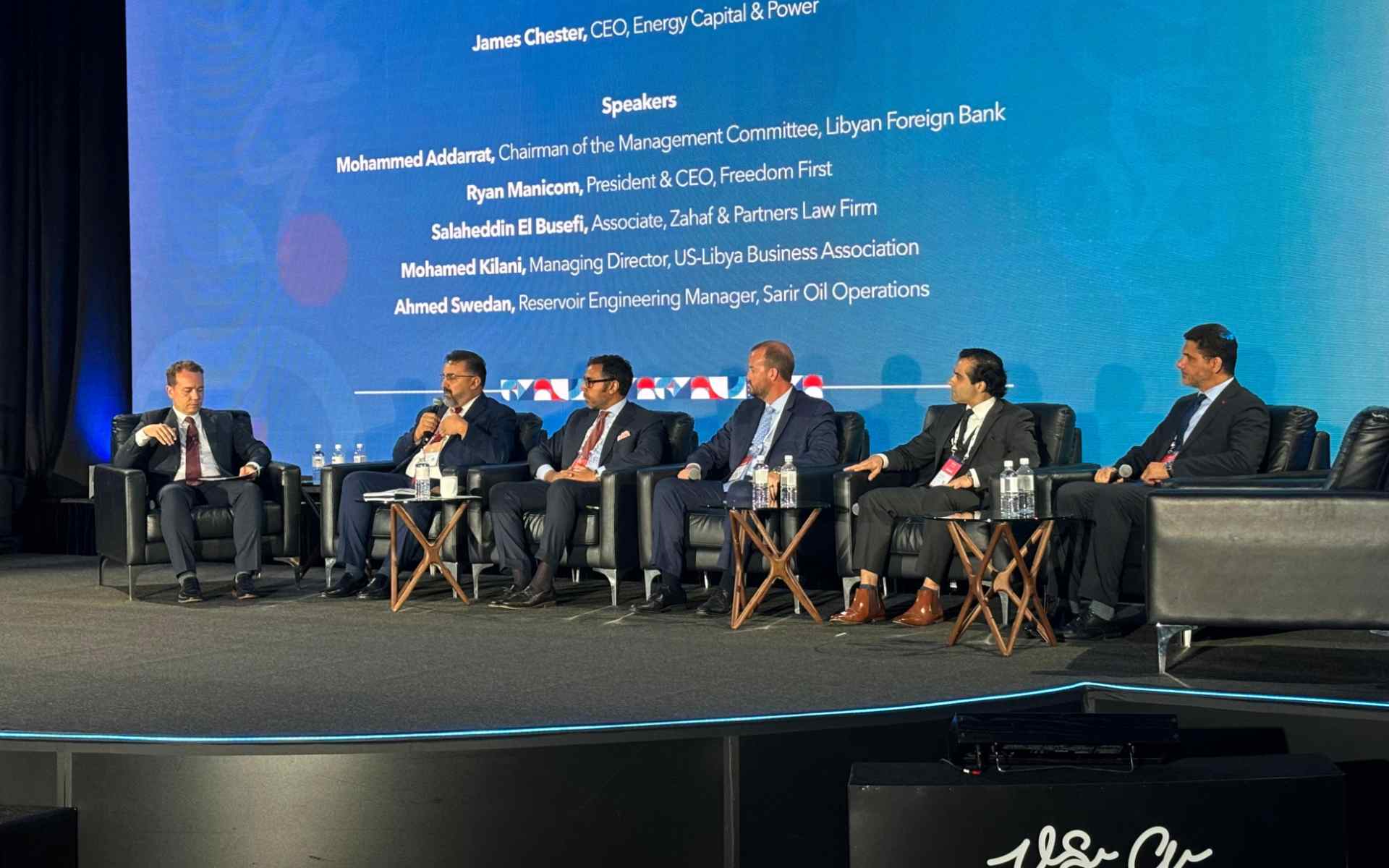
Speaking at the U.S.-Africa Energy Forum in Houston on Wednesday, Mohammed Addarrat, Chairman of the Management Committee at Libyan Foreign Bank (LFB), said the bank has become a central financial conduit for the country’s oil and gas sector. “LFB is the financial gateway for Libya from a banking perspective – it is the primary bank that receives all the oil and gas revenues for the NOC,” he said. “We’ve been pushing for the last 3-4 years – thinking outside the box of how we’re traditionally used.”
Addarrat acknowledged hurdles such as delays in supplier payments – primarily due to the lack of an approved national budget – but said the fundamentals of the sector remain strong, regardless of political developments. “From a legal and IOC operation standpoint, not much has changed.”
“The top issues in Libya are identifying a unified contracting authority, modernizing the Production Sharing Agreements to stay regionally competitive, and the issue of currency and ensuring U.S. companies are paid,” said Mohamed Kilani, Managing Director of the US-Libya Business Association.
New licensing rounds and deal activity are driving renewed momentum, marked by ExxonMobil’s return after a decade hiatus and a recent contract awarded to a U.S. firm for a major integrated gas project. “There’s a real reception toward new partnerships, perhaps more now than in the last 10 years,” said Kilani.
U.S. firms are beginning to see Libya as a space to apply lessons learned from mature oil markets, including the Permian Basin which holds geological similarities. “From a geological side, Libya is a fantastic opportunity,” said Ryan Manicom, President & CEO of Freedom First. “Take those lessons learned from the Permian basin, bring those proven technologies from the U.S. and give them an opportunity to work in Libya.”
Beyond geology, the panel emphasized that legal and structural clarity is steadily improving. Salaheddin El Busefi, Associate at Zahaf & Partners Law Firm, acknowledged Libya’s complex regulatory environment but said legal and investment frameworks are evolving in a more investor-friendly direction. “We have a strong but undermarketed investment law – it’s a super piece of legislation, but it doesn’t permit oil and gas services. So, you have to invest either through a branch or a joint venture,” he said, adding that licensing round structures have improved and investor protection has become “paramount.”
Ahmed Swedan, Reservoir Engineering Manager at Sarir Oil Operations, underscored the value of revitalizing mature assets with modern tools. “NOC is driving bidding and exploration activities, but at the same time, there are brownfields, low-risk high yield approaches where you can go back to old fields with new technology.”
The LFB, meanwhile, is actively seeking to deepen international engagement. “Not only being the bank of choice for partners and NOCs, but being a vehicle that transforms into economic prosperity,” Addarrat said. “We’re looking for U.S. companies that can help us expand our network.”
About author
Grace Goodrich
Featured Stories

Angola at 50: AOG 2025 Affirms Oil and Gas as a Development Driver
Anine Kilian
2025-05-09

USAEF to Spotlight African Energy Opportunities, U.S.-Africa Collaboration
Anine Kilian
2025-04-25